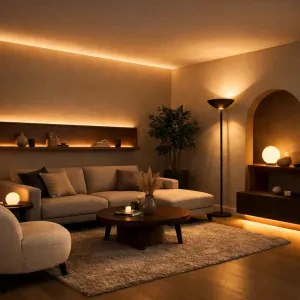
When you're lighting up your home, understanding lumens is key. Lumens measure how much light a bulb produces. The higher the lumens, the brighter the light. But how many lumens do you really need for each room? It all depends on what you’re using the space for.
Let’s break it down by room. For cozy, relaxed areas like the living room, aim for about 1,500 to 3,000 lumens. You want enough light to see comfortably but not so much that it feels harsh. In kitchens, you might need 3,000 to 5,000 lumens because cooking requires clear visibility. Think of it as lighting that supports your cooking adventures!
Bathrooms can be a bit tricky. For an energizing start to your day, shoot for around 2,000 to 4,000 lumens. Good lighting here is essential for everything, from applying makeup to getting a clean shave. Bedrooms, on the other hand, create a different vibe. Aim for 1,000 to 2,000 lumens for a soft, soothing atmosphere that promotes relaxation.
Don’t forget about variable lighting options! Think about using dimmers or multi-source lighting to adjust the ambiance. This way, you can have your space bright when you need it and soft when it’s time to wind down. Just remember, these are true guidelines but adjust based on your personal comfort and style.
Measuring Room Size and Requirements
Before you start calculating the lumens you need for each room, it’s super important to know the size of your space. Grab a measuring tape and jot down the dimensions of your room. Measure the length and width, and don’t forget about the height if you're considering overhead lighting. The size of the room plays a big role in how bright you'll need it to be. A small bedroom doesn’t need as much light as a spacious living room.
Once you have those measurements, you'll want to figure out the total square footage. Just multiply the length by the width. For example, if your living room is 12 feet by 15 feet, you’ll have a total of 180 square feet. Easy peasy! This number is the groundwork for calculating how many lumens you’ll need.
Different rooms have different lighting needs. A kitchen or bathroom may require brighter lighting, while a cozy reading nook benefits from softer light. Here’s a quick guide for the recommended lumens based on room type:
Now that you have your square footage and know how many lumens per square foot are needed, you can easily calculate the total lumens required. Just multiply your room's square footage by the number of lumens per square foot needed. Remember, this is a guideline, and if you like things a bit brighter or dimmer, feel free to adjust. Finding the right lighting is about creating the perfect atmosphere, true?
Choosing the Right Light Bulbs
First off, you need to consider the type of light bulb. LED bulbs are super popular these days. They’re energy-efficient, long-lasting, and they give off a nice quality of light. If you're still using incandescent bulbs, it's time to make the switch. LED lights typically have higher lumens per watt, so you get true brightness for less energy.
Next, think about the intensity you want. For kitchens or workspaces, aim for higher lumens—around 300-400 lumens per bulb should do the trick. For bedrooms and living areas, go for a softer touch; about 100-200 lumens per bulb keeps things cozy. You can always mix and match to find what feels right.
Lastly, don’t forget about the bulb’s color temperature. Measured in Kelvins, this is what gives your light that warm or cool feel. Warmer lights (2700K-3000K) are great for relaxing spaces, while cooler lights (4000K and above) work well for areas where you need to focus. Choosing the right color temperature can make your home feel just right, and that's a true game-changer!
Calculating Total Lumens Needed
To figure out how many lumens you need, start by thinking about the size of the room and the activities you plan to do there. You'll want bright lighting for tasks like reading or cooking, while softer light is great for relaxing. A good starting point is to measure the square footage of the room. Then, aim for around 100 lumens per square foot for general lighting.
For example, if you have a living room that’s 300 square feet, you’ll need about 30,000 lumens total. That may sound like a lot, but remember: you don’t have to get all your light from one source. You can mix different fixtures to achieve that true brightness in a way that's cozy and inviting.
Next, consider the color of your walls and furnishings. Light colors reflect more light, so you might need fewer lumens in a room with light walls compared to a dark one. You might also adjust according to the room’s function. A bright kitchen needs more lumens than a quiet bedroom.
Don’t forget about layering your lights! Use a combination of ambient, task, and accent lighting to create the perfect atmosphere. If you’re still unsure, a handy rule of thumb is to multiply your room’s square footage by the recommended lumens per square foot for your specific needs. That way, you’ll always find the true amount that suits your space.